


 Cart
Cart
 sales@molnova.com


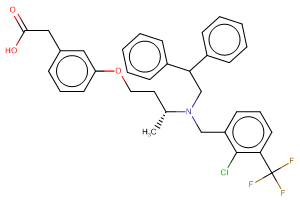
RGX-104 free Acid
CAS No. 610318-54-2
RGX-104 free Acid( —— )
Catalog No. M21011 CAS No. 610318-54-2
RGX-104 free Acid is an agonist of potent liver-X nuclear hormone receptor (LXR) .
Purity : >98% (HPLC)
 COA
Datasheet
HNMR
HPLC
MSDS
Handing Instructions
COA
Datasheet
HNMR
HPLC
MSDS
Handing Instructions
| Size | Price / USD | Stock | Quantity |
| 2MG | 80 | Get Quote |


|
| 5MG | 125 | Get Quote |
|
| 10MG | 200 | Get Quote |
|
| 25MG | 402 | Get Quote |
|
| 50MG | 593 | Get Quote |
|
| 100MG | 845 | Get Quote |
|
| 200MG | Get Quote | Get Quote |
|
| 500MG | Get Quote | Get Quote |
|
| 1G | Get Quote | Get Quote |
|
Biological Information
-
Product NameRGX-104 free Acid
-
NoteResearch use only, not for human use.
-
Brief DescriptionRGX-104 free Acid is an agonist of potent liver-X nuclear hormone receptor (LXR) .
-
DescriptionRGX-104 free Acid is an agonist of potent liver-X nuclear hormone receptor (LXR) .
-
In Vitro——
-
In VivoAnimal Model:NOD SCID or RAG mice injected with 1×10⁶ SKOV3 ovarian cancer cells.Dosage:100 mg/kg.Administration:Oral administration daily for about 60 days.Result:Robustly suppressed tumor growth and progression.
-
Synonyms——
-
PathwayOthers
-
TargetOther Targets
-
RecptorLXRβ
-
Research AreaCancer
-
IndicationLymphoma; Solid tumours
Chemical Information
-
CAS Number610318-54-2
-
Formula Weight596.08
-
Molecular FormulaC34H33ClF3NO3
-
Purity>98% (HPLC)
-
SolubilityDMSO:130 mg/mL (218.09 mM)
-
SMILESC[C@H](CCOc1cccc(CC(=O)O)c1)N(Cc1cccc(C(F)(F)F)c1Cl)CC(c1ccccc1)c1ccccc1
-
Chemical Name——
Shipping & Storage Information
-
Storage(-20℃)
-
ShippingWith Ice Pack
-
Stability≥ 2 years
Reference
1.Tavazoie M F Pollack I Tanqueco R et al. LXR/ApoE Activation Restricts Innate Immune Suppression in Cancer[J]. Cell 2018:S0092867417315064.
molnova catalog



related products
-
6-Bromo-2-hydroxy-3-...
6-Bromo-2-hydroxy-3-methoxybenzaldehyde is an inhibitor of IRE-1α (IC50 : 0.08 μM).
-
3,4-Dihydroxybenzyla...
3,4-Dihydroxybenzylamine hydrobromide inhibits DNA polymerase activity in melanoma cells and displays growth inhibitory activity in melanoma cell lines with varying degrees of tyrosinase activity.
-
Morin
Morin is a chemical compound. It is a yellow color substance that can be isolated from Maclura pomifera (Osage orange), Maclura tinctoria (old fustic) and from leaves of Psidium guajava (common guava).
